تقييم AgriTech.tr
صياغة تحريرية وإرشادات مقارنة أُعدّت للمساعدة في تحديد المتطلبات.
 AgriTech.trالحلول
الحلول
ملفات متطلبات لمشاريع الهندسة والتكامل والتركيب والتشغيل.
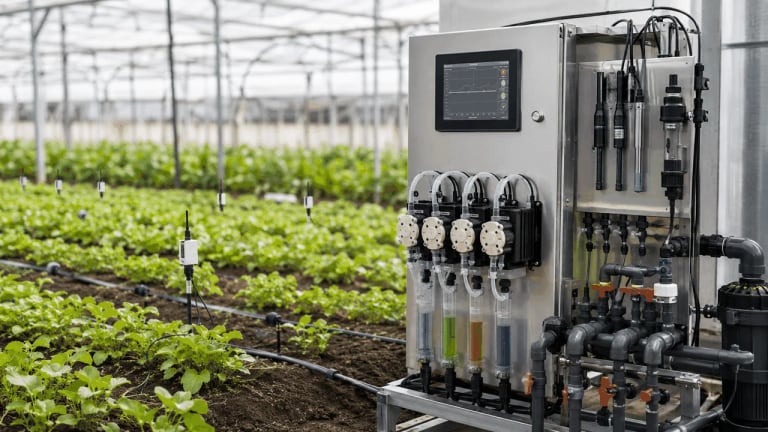
Automated fertigation and greenhouse root-zone control solution
An integrated automation system for EC/pH-controlled fertilizer and acid dosing, crop-stage recipes, sensor-driven parcel irrigation, valve and pump sequencing, root-zone management, greenhouse climate interfaces, alarms, and operational reporting.
 صورة توضيحية
منشأ التوريد
تركيا
نطاق المشتريات
حل متكامل
آخر مراجعة
13/07/2026
صياغة تحريرية وإرشادات مقارنة أُعدّت للمساعدة في تحديد المتطلبات.
نطاقات تخطيطية وليست تكوينًا نهائيًا مضمونًا.
تدعم المواد العامة السياق الفني؛ ولا تزال التفاصيل التجارية الحالية بحاجة إلى تأكيد.
Automated fertigation and greenhouse root-zone control solution
ملفات متطلبات لمشاريع الهندسة والتكامل والتركيب والتشغيل.
Modular fertigation, irrigation, root-zone, and greenhouse-control architecture
EC/pH fertilizer and acid dosing, recipe and setpoint management, parcel irrigation, climate and root-zone control, monitoring, alarms, and reporting
Direct inline injection, batch or mix-tank preparation, and compact dosing-skid configurations
EC/pH feedback, crop-stage recipes, time schedules, sensor-driven conditions, interlocks, manual override, and safe fallback
15–60 m³/hour reference range; final flow follows the water analysis, simultaneous-zone demand, pipework, pump duty, filtration, and hydraulic calculation
ملفات متطلبات لمشاريع الهندسة والتكامل والتركيب والتشغيل.
التطبيقات والسياق التشغيلي لهذا الحل.
Soilless greenhouse fertigation where crop-stage recipes, EC-pH targets, irrigation frequency, root-zone moisture, and climate conditions need to be managed as connected operational layers.
High-value greenhouse vegetable, berry, and protected-cropping operations requiring repeatable fertilizer and acid dosing procedures, alarms, operator permissions, and traceable records.
Multi-block greenhouses comparing the inline dosing configuration, the mix-tank dosing configuration, or the compact dosing configuration configurations according to hydraulic flow, recipe diversity, mixing architecture, dosing capacity, climate integration, and reporting requirements.
Open-field parcel irrigation using weather, soil, flow, pressure, water-source, valve, pump, and line information for scheduled or condition-based zone control.
Drip, sprinkler, zone-based, or pivot/linear irrigation projects where automation must be designed around pressure-flow balance, filtration, pump duty, valve logic, measurement, and expansion capacity.
Greenhouse modernization and retrofit projects replacing timer-only or heavily manual irrigation with measured, logged, scenario-based control while reusing suitable existing infrastructure.
Operations requiring remote monitoring, live alarms, time-stamped records, recipe and consumption logs, and the greenhouse operations reporting layer-aligned reporting subject to project-specific software and data-scope confirmation.
Technical due diligence for farms, cooperatives, investors, EPC contractors, and integrators that need to separate dosing hardware, hydraulic infrastructure, greenhouse automation, data systems, commissioning, and service responsibilities.
تتطلب هوية المورّد والمنشأ والتوفر والتكوين النهائي والشهادات والسعر ومدة التوريد والضمان والتسليم وشروط العقد تأكيدًا حاليًا.
المنهج والمصادر والسياق المستخدم في إعداد صفحة البحث هذه.
This profile defines a sourcing requirement for automated fertigation and irrigation control system. Suitable suppliers, origin, availability, and commercial terms are confirmed for the buyer’s project. The sourcing brief is structured around capacity, application, operating environment, required standards, destination, and delivery scope; the exact configuration requires supplier confirmation.
For greenhouse growers, soilless production teams, open-field farms, and irrigation integrators in Türkiye, a fertigation project should be evaluated as a water, nutrient, hydraulic, control, and data system rather than as a fertilizer injector alone.
Automated fertigation combines EC/pH-controlled fertilizer and acid dosing with crop-stage recipes, parcel and zone irrigation, weather and root-zone sensing, valve and pump automation, greenhouse climate coordination, remote supervision, alarms, and traceable reporting. The dosing section can use direct inline injection, a batch or mix-tank architecture, or a compact dosing skid; the hydraulic design selects the arrangement according to flow, recipe diversity, stock-solution chemistry, number of blocks, and required dosing precision.
The central Project specification is therefore not simply “Which dosing machine should we buy?” It is “Can the complete system measure the right variables, prepare and deliver the intended nutrient solution, control irrigation hydraulically, react safely to faults, preserve usable records, and remain serviceable through the production season?”
| Control layer | Technical capability | Project specification |
|---|---|---|
| EC-pH dosing | Fertilizer and acid dosing with EC-pH feedback and crop-stage target ranges. | EC and pH sensor make/model, measuring range, temperature compensation, calibration standards, cleaning routine, dosing-channel count, stock-tank compatibility, chemical-resistant materials, and interlocks. |
| Recipe and setpoint management | Crop-stage recipes, target EC/pH ranges, recipe tracking, and configurable control parameters. | Recipe ownership, units, version history, approval rights, crop-stage transitions, manual override, rollback, batch traceability, and operator-change records. |
| Dosing and mixing | Direct inline injection, batch or mix-tank preparation, and compact dosing-skid architectures. | Injection method, pump type, simultaneous channels, mixing volume, contact time, stock-concentration limits, incompatible-fertilizer separation, acid sequence, flush logic, and dosing repeatability. |
| Parcel and zone irrigation | Block- and parcel-level irrigation with valve, pump, and line scenarios. | Maximum practical zone count, concurrent zones, valve architecture, pump staging, pressure regulation, flow measurement, filtration, line flushing, water-source switching, and future expansion. |
| Measurement layer | Weather, soil, root-zone, flow, pressure, and water-source measurements. | Sensor placement, sampling frequency, calibration, communication protocol, cable or wireless design, replacement interval, data gaps, and implausible-sensor handling. |
| Condition-based automation | The control architecture supports time- and sensor-driven operation using weather and soil-moisture inputs. | Decision priority when time, rainfall, wind, soil moisture, crop recipe, and operator commands conflict; hysteresis, minimum run time, lockouts, and safe fallback behavior. |
| Greenhouse control | Scenario-based coordination of climate, irrigation, and root-zone measurements with selected actuators. | Itemize controlled and monitored windows, fans, circulation equipment, heating, cooling, screens, pumps, irrigation functions, interlocks, and manual fallback. |
| Monitoring, alarms, and remote access | Mobile and PC visibility, live alarms, notifications, panel access, remote commands, and time-stamped records. | User roles, acknowledgement, escalation, offline operation, remote-command permissions, network architecture, audit logs, backups, and support access. |
| Reporting and operational traceability | Recipe, consumption, sensor, automation, operator-action, and alarm records. | Export formats, API or database access, retention, account ownership, data-controller responsibilities, timestamp synchronization, backup, and exit-data portability. |
Three dosing architectures cover different installation scales and operating rhythms: direct inline injection for continuous proportional dosing, mix-tank preparation for batch recipes and larger multi-block systems, and compact dosing skids for smaller installations. 15–60 m³/hour design flow, 3.0–5.0 bar line pressure, and 60–1000 L/hour dosing provide useful reference ranges; final capacity follows the project water analysis, hydraulic calculation, simultaneous-zone demand, stock concentration, and dosing-channel design.
These figures are useful for early comparison, but they are not a complete hydraulic design or a guarantee for every configuration. Buyers should request the approved project technical schedule and hydraulic calculation for the exact number of lines, fertilizer channels, water source, pressure technical specification, irrigation demand, and greenhouse or field layout.
| System configuration | Typical operating fit | Reference technical values | Project-definition questions |
|---|---|---|---|
| Direct inline injection | Continuous proportional dosing for single-block or medium-to-high-flow lines. | 15–60 m³/h design-flow, 3.0–5.0 bar line-pressure, and 60–1000 L/h dosing reference envelope. | Validate variable-flow range, sensor and dosing-pump combination, calibration, and control-loop response after a flow change. |
| Batch or mix-tank preparation | Multiple recipes and larger operations requiring controlled mixing and modular distribution. | Project-sized tank volume, mixing cycle, dosing channels, distribution flow, and simultaneous-block capacity. | Define agitation, recipe-change flush volume, carryover, simultaneous-line logic, incompatible-stock separation, and cleanout. |
| Compact dosing skid | Small and mid-scale greenhouse or open-field installations requiring focused EC/pH control and rapid commissioning. | Compact multi-channel dosing package sized to the selected pump, manifold, sensor, and hydraulic envelope. | Define included channels, sensors, alarms, records, hydraulic limits, and expansion options. |
Electrical conductivity is a useful control variable for the total ionic strength of a nutrient solution, while pH is a critical operating variable for solution chemistry and nutrient-management decisions. However, an EC target does not prove that the intended nutrient recipe is chemically correct. Two solutions can reach similar EC values with different ionic compositions.
For this reason, a serious fertigation design should keep three layers separate:
EC/pH feedback, recipe sets, trend monitoring, and alarms form the core dosing-control loop. The engineering control philosophy defines sensor placement, sample conditioning, calibration, dosing sequence, response time, interlocks, fallback behavior, and the boundary between automatic and operator-approved actions.
For broader greenhouse technical context, FAO’s Good Agricultural Practices for greenhouse vegetable crops: Principles for Mediterranean climate areas is a useful reference when defining water, nutrient, irrigation, and protected-cropping requirements. Project setpoints should still be crop-, substrate-, water-, climate-, and production-strategy-specific.
An EC-pH controller cannot compensate for an undefined water source. The procurement team should agree the required water-analysis panel before the dosing architecture is finalized.
Depending on the crop and production system, the project team may need to review source-water EC and pH together with alkalinity or bicarbonate, hardness, major ions, sodium, chloride, iron, manganese, suspended solids, and parameters relevant to biological or emitter-clogging risk. The point is not to create a generic laboratory checklist for every farm; it is to ensure that acid demand, fertilizer compatibility, filtration, precipitation risk, emitter protection, and recipe design are based on the actual source water.
Ask the integrator to show how the water analysis changes:
The irrigation architecture connects measurement + automation + traceability. Inputs can include weather-station data, soil moisture and temperature, flow, pressure, tank or reservoir level, water quality, and source status. The execution layer coordinates pumps, filters, valves, flushing, pressure regulation, and line management with time-based or condition-based logic.
The control architecture supports scheduled and condition-based irrigation using calendar, rainfall, wind, and soil-moisture inputs, together with remote monitoring and authorized intervention. Wireless valve control can be added for drip, sprinkler, pivot, and linear irrigation projects.
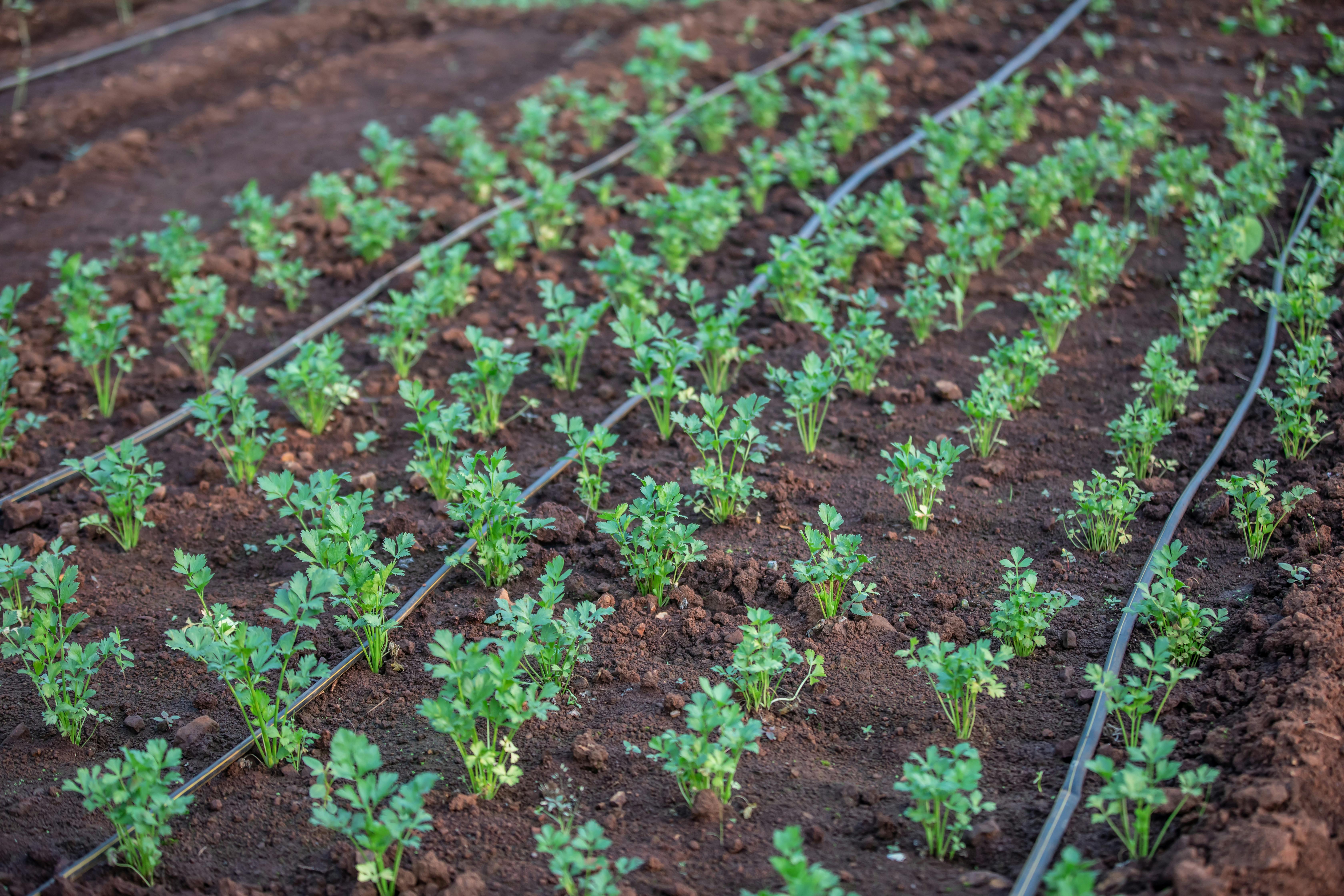
Drip-irrigation and field-zone context. Photo by Anil Sharma on Pexels. Photo source · Pexels License.
Automation cannot correct a poorly defined hydraulic network. The technical file should identify:
A buyer should request a hydraulic schematic, I/O list, valve schedule, pump schedule, sensor schedule, and cause-and-effect matrix. A dashboard screenshot is not a substitute for these project documents.
The greenhouse-control layer combines climate, irrigation, and root-zone data. A project sensor package can include temperature, relative humidity, CO₂, solar radiation or PAR, light, substrate moisture, drain EC/pH, and weather-station data, while the control layer coordinates vents, fans, heating, cooling, screens, irrigation, alarms, remote access, and energy or KPI reports.
Scenario-based actions can include:
These examples are technically meaningful, but they should not be read as proof that every quoted project includes every sensor, actuator, climate device, or control strategy. The contract and bill of materials should state exactly which equipment is controlled and which equipment is only monitored.
| Project scale | Configurable scope | Engineering interpretation |
|---|---|---|
| Small greenhouse | Direct inline injection or a compact dosing skid, zone-based irrigation control, essential sensing, alarms, and reporting. | Confirm zone limits, dosing channels, sensor package, report depth, utilities, and expansion path. |
| Mid-scale greenhouse | Batch or mix-tank dosing, advanced irrigation scenarios, and climate and root-zone integration. | Confirm controlled climate actuators, supported blocks and recipes, mixing volume, and product-change procedure. |
| Large greenhouse | Multi-line dosing management, central control, remote access, and operational KPI reporting. | Confirm server/network design, redundancy, multi-site architecture, user management, backup/restore, and service coverage. |
A fertigation system is not commissioned merely because pumps run and a dashboard opens. AgriTech.tr recommends defining a written site-acceptance test before final handover.
A practical acceptance plan can include:
The platform can provide remote access, monitoring, alarms, time-stamped records, role-based authorization, and operational reporting. The project specification defines:
For larger greenhouse and multi-block projects, network segmentation, remote vendor access, backup configuration files, time synchronization, and disaster recovery should be discussed during design rather than after an incident.
This type of integrated fertigation and irrigation automation can be relevant for:
Water, fertilizer, labor, energy, quality, or yield improvements should be treated as project-specific until supported by operating records. Before installation, establish a baseline and agree on the measurement method.
Useful comparison indicators may include:
A before-and-after result is not automatically caused by the automation system. Crop variety, season, greenhouse climate, substrate, labor, pest pressure, fertilizer program, and other operational changes should be documented when interpreting results.
The sourcing brief can be used to define the application, technical interfaces, documentation, and service requirements before supplier research begins.
For guidance on comparing solution architectures, preparing a vendor questionnaire, or defining a site-acceptance checklist, contact info@agritech.tr.
The article photographs provide greenhouse and field-irrigation context and are used under the Pexels License. Photographer and source credits are retained in the reference section.
AgriTech.tr can structure the technical requirement and compare current supplier responses for the buyer’s project. Installation, commissioning, operator training, warranty, spare-parts, and after-sales scope must be confirmed in each supplier quotation. The final scope should be documented against the approved application, capacity, site conditions, destination, and delivery schedule in the selected supplier quotation and contract.
المنهج والمصادر والسياق المستخدم في إعداد صفحة البحث هذه.
Technical reference used for system specification, project engineering, and procurement planning.
Technical reference used for system specification, project engineering, and procurement planning.
Technical reference used for system specification, project engineering, and procurement planning.
Technical reference used for system specification, project engineering, and procurement planning.
Technical reference used for system specification, project engineering, and procurement planning.
Technical reference used for system specification, project engineering, and procurement planning.
المصادر المرجعية
توضّح المؤشرات مصدر المعلومات العامة وما لا يزال بحاجة إلى تأكيد. وهي ليست شارات اعتماد للمورّدين.
تقييم AgriTech.tr
صياغة تحريرية وإرشادات مقارنة أُعدّت للمساعدة في تحديد المتطلبات.
نطاقات هندسية نموذجية
نطاقات تخطيطية وليست تكوينًا نهائيًا مضمونًا.
6 مصادر عامة
تدعم المواد العامة السياق الفني؛ ولا تزال التفاصيل التجارية الحالية بحاجة إلى تأكيد.
ادعاءات مقدّمة من المورّد
لا يتضمن ملف الأدلة هذا أي ادعاء مقدّم من مورّد.
معلومات تم التحقق منها بالوثائق
لا يوجد سجل تحقق أساسي مرفق بهذا الإدراج.
صور الإدراج
الصور توضيحية وقد لا تُظهر التكوين النهائي الذي سيتم توريده.
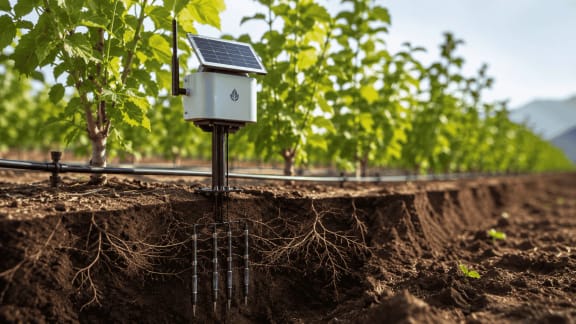
Irrigation, Fertigation & Water Efficiency
تركياA solar-powered LoRaWAN field system measuring soil moisture at three or four root-zone depths, with temperature sensing, optional EC measurement, IP68 probes, cloud and mobile monitoring, alerts, data export, and irrigation scheduling support.
تتطلب هوية المورّد والشروط التجارية تأكيدًا حاليًا
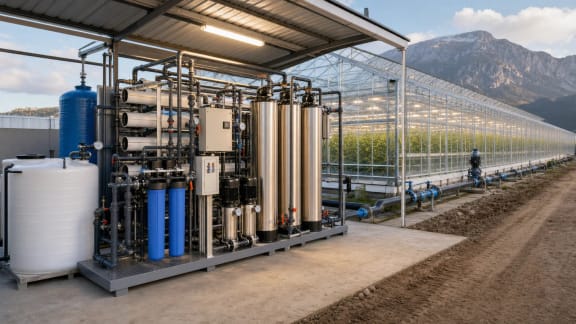
Irrigation, Fertigation & Water Efficiency
تركياA modular brackish-water reverse-osmosis system engineered from a complete water analysis, with pretreatment, membrane separation, conductivity monitoring, cleaning, optional blending and a documented concentrate-management plan for high-value irrigation.
تتطلب هوية المورّد والشروط التجارية تأكيدًا حاليًا
Irrigation, Fertigation & Water Efficiency
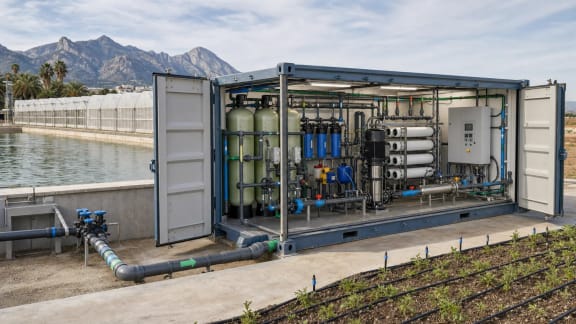
تركيامحطة معالجة مجمعة في المصنع داخل حاوية، تُهيأ وفق خصائص مياه المصدر ومتطلبات نقاط الري، وتجمع بين الترشيح متعدد المراحل والغسيل العكسي الآلي ووحدات الأغشية أو التطهير الاختيارية والمراقبة عبر الإنترنت وأنظمة التحكم المحمية.
تتطلب هوية المورّد والشروط التجارية تأكيدًا حاليًا