Independent guide
AgriTech.tr prepared this explanation and comparison guidance.
 AgriTech.trSolutions
Solutions
Practical guides for projects that may include engineering, equipment, installation, and commissioning.
Cold-chain monitoring and traceability solution
An integrated cold-chain platform combining temperature and humidity sensors, QR and RFID identity, real-time stock and location records, automated alarms, escalation workflows, and reporting for storage and distribution operations.
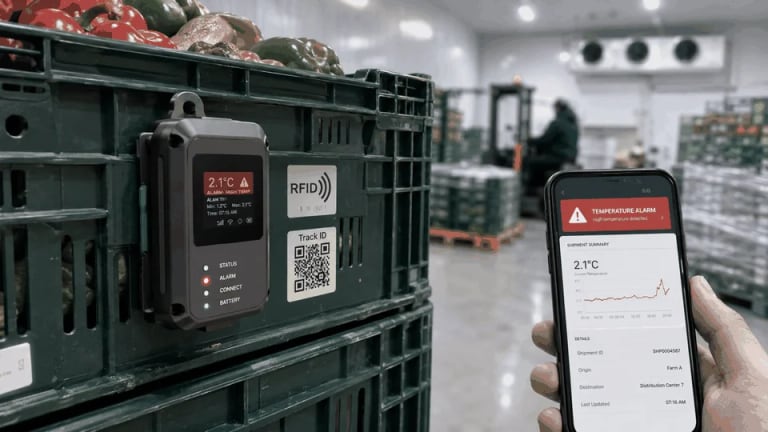 Illustrative image
Supplier location
Türkiye
Guide type
Complete solution
Last reviewed
13 Jul 2026
AgriTech.tr prepared this explanation and comparison guidance.
Useful starting points, not a guaranteed final configuration.
Public sources support the technical overview. Current prices, availability, and commercial details still need confirmation.
Cold-chain monitoring and traceability solution
Practical guides for projects that may include engineering, equipment, installation, and commissioning.
IoT cold-chain management
Temperature/humidity sensors, QR/RFID identity, platform monitoring, alarms, stock/location tracking, and escalation workflow
Sensor packages can span applications from approximately -200°C to +200°C, with each probe specified by its own range, accuracy, calibration, response, and installation limits
Sensor hardware, calibration, sampling interval, alarm workflow, QR/RFID identity model, connectivity, platform retention, API, SLA, and deployment terms are defined per project
Practical guides for projects that may include engineering, equipment, installation, and commissioning.
Applications and operating context for this solution.
Cold rooms, warehouses, vehicles, refrigerators, and storage points handling frozen food or other temperature-sensitive products.
Operations needing QR/RFID identity with temperature and humidity records.
Logistics and quality teams tracking product stock, location, alarms, and cold-chain incidents.
Food, pharmaceutical, vaccine, and sensitive-product workflows where temperature range and audit trail matter.
Organizations comparing IoT platform monitoring with standalone dataloggers or manual logs.
Confirm the supplier, final configuration, certifications, price, delivery, and warranty before you buy.
The sources, methods, and context used to prepare this page.
This profile defines a sourcing requirement for IoT cold-chain traceability platform. Suitable suppliers, origin, availability, and commercial terms are confirmed for the buyer’s project. The sourcing brief is structured around capacity, application, operating environment, required standards, destination, and delivery scope; the exact configuration requires supplier confirmation.
| Layer | What it provides | Project specification |
|---|---|---|
| Sensor monitoring | Temperature and humidity tracking for sensitive products, storage zones, and transport assets. | Sensor make/model, range, accuracy, calibration, probe/display options, sampling interval, and battery life. |
| Identity and stock | QR labels and RFID-enabled identification linked to batches, assets, and sensor records. | Product/batch linkage, stock logic, location accuracy, chain of custody, and user workflow. |
| Platform records | Real-time monitoring, historical trends, excursion records, and configurable reference ranges. | Dashboard roles, export, retention, API, audit trail, and data ownership. |
| Alarm workflow | E-mail, mobile notification, SMS, and optional call-centre escalation. | Thresholds, escalation rules, no-data alerts, intervention timing, acknowledgement, and SLA. |
| Deployment | Value depends on site layout and operations. | Site survey, connectivity, installation, maintenance, training, warranty, and references. |
AgriTech.tr can structure the technical requirement and compare current supplier responses for the buyer’s project. Installation, commissioning, operator training, warranty, spare-parts, and after-sales scope must be confirmed in each supplier quotation. The final scope should be documented against the approved application, capacity, site conditions, destination, and delivery schedule in the selected supplier quotation and contract.
The sources, methods, and context used to prepare this page.
Technical reference used for system specification, project engineering, and procurement planning.
Technical reference used for system specification, project engineering, and procurement planning.
See where the information came from and what must still be confirmed with a supplier.
Independent guide
AgriTech.tr prepared this explanation and comparison guidance.
Planning values
Useful starting points, not a guaranteed final configuration.
2 public sources
Public sources support the technical overview. Current prices, availability, and commercial details still need confirmation.
Supplier-provided claims
No supplier-provided claim is represented in this evidence profile.
Document-verified information
No underlying verification record is attached to this listing.
Listing images
Images are illustrative and may not show the final sourced configuration.
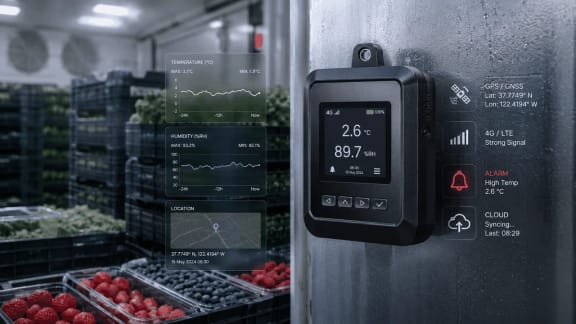
Cold Chain, Storage & Agri-Logistics
TürkiyeA rugged connected logger for temperature, humidity and location monitoring with integrated 4G/LTE communications, GPS/GNSS, cloud archiving, SMS and email alarms, long-life battery, IP67 enclosure, and compliance-oriented reporting workflows.
Supplier and commercial terms require current confirmation
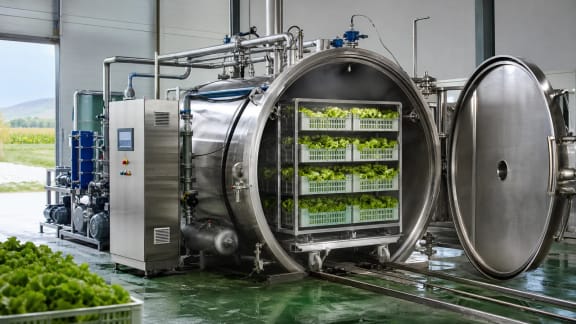
Cold Chain, Storage & Agri-Logistics
TürkiyeA pallet or trolley vacuum-cooling chamber that rapidly removes heat through controlled moisture evaporation, with optional fine-mist compensation and recipe-based operation for suitable leafy and porous produce.
Supplier and commercial terms require current confirmation
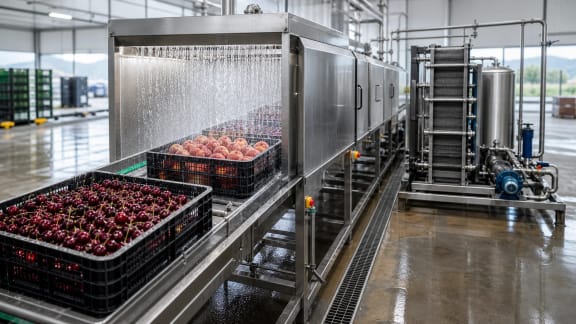
Cold Chain, Storage & Agri-Logistics
TürkiyeA recirculating shower or immersion hydrocooler that combines a refrigeration heat exchanger, filtration, hygienic water management and adjustable residence time for produce proven tolerant of water contact.
Supplier and commercial terms require current confirmation