Оценка AgriTech.tr
Редакционная структура и рекомендации по сравнению, подготовленные для формулирования требований.
 AgriTech.trТехнологии
Технологии
Технические руководства по выбору и спецификации для подбора сельскохозяйственной продукции и оборудования.
Aquaculture water-quality monitoring equipment
A cage-mounted, solar-powered monitoring system with optical dissolved-oxygen sensing, temperature and saturation measurement, cloud data records, configurable alarms, remote access, and installation options for commercial aquaculture sites.
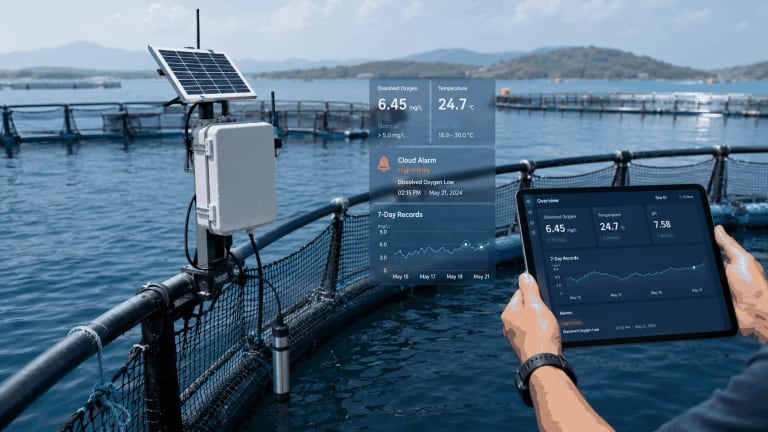 Иллюстративное изображение
Происхождение поставки
Турция
Объём закупки
Спецификация для подбора
Последняя проверка
13 июл. 2026 г.
Редакционная структура и рекомендации по сравнению, подготовленные для формулирования требований.
Ориентировочные диапазоны для планирования, а не гарантированная окончательная комплектация.
Публичные материалы подтверждают технический контекст; актуальные коммерческие сведения всё ещё требуют подтверждения.
Aquaculture water-quality monitoring equipment
Технические параметры, используемые для формулирования требований и сравнения комплектаций, подтверждённых поставщиками.
Cage aquaculture monitoring systems
Solar-powered cage-mounted continuous water-quality monitoring and remote alarm system
Dissolved oxygen, temperature, and oxygen saturation in the core monitoring package
Optical dissolved-oxygen probe specified by make/model, mg/L and saturation ranges, accuracy, resolution, response time, optical-cap life, compensation functions, calibration method, and maximum depth
Probe can be lowered from the cage structure toward deeper water or feeding depth; exact installed depth should be designed around cage and water-column conditions
Технические параметры, используемые для формулирования требований и сравнения комплектаций, подтверждённых поставщиками.
Практические сведения, помогающие сравнивать варианты.
Continuous dissolved-oxygen, temperature, and oxygen-saturation monitoring at marine, dam, reservoir, river, and other cage aquaculture sites where manual sampling alone may not capture short-duration water-quality changes.
Fish farms that need configurable oxygen-risk alarms connected to a documented staff escalation, verification, feeding, oxygenation, transfer, or emergency-response procedure.
Cage facilities evaluating sensor placement at feeding depth or another representative point in the water column and determining whether single-depth or multi-depth oxygen monitoring is operationally appropriate.
Solar-powered retrofit projects where shore power or new power cabling to individual cages is difficult and the buyer needs to verify battery autonomy, low-voltage behavior, solar sizing, and maintenance access.
Multi-cage aquaculture operations requiring current and historical water-quality records accessible by authorized managers through mobile, tablet, or computer devices.
Operations comparing fixed optical dissolved-oxygen monitoring with handheld oxygen meters and requiring a documented cleaning, field-check, calibration, reference-comparison, and data-quality workflow.
Aquaculture managers reviewing oxygen trends alongside feeding, stocking density, transfer, harvest, oxygenation capacity, or seasonal water conditions without treating correlation as automatically proven causation.
Facilities assessing pH, salinity, turbidity, chlorophyll-A, GPS, longer probe cable, or buoy configurations as project-specific options rather than assuming every parameter is included in the standard monitoring package.
Aquaculture IoT and cloud-monitoring projects where mobile signal, offline buffering, communication-loss alarms, timestamp preservation, export formats, user permissions, and data ownership must be tested before scale-up.
Cage farms evaluating monitoring as an input to oxygen-control architecture while separately specifying oxygen supply, distribution, actuators, fail-safe behavior, manual override, sensor redundancy, and emergency capacity.
Личность поставщика, происхождение, доступность, окончательная комплектация, сертификаты, цена, срок поставки, гарантия, доставка и договорные условия требуют актуального подтверждения.
Методы, источники и контекст, использованные при подготовке этой страницы исследования.
This profile defines a sourcing requirement for solar aquaculture water-quality monitoring system. Suitable suppliers, origin, availability, and commercial terms are confirmed for the buyer’s project. The sourcing brief is structured around capacity, application, operating environment, required standards, destination, and delivery scope; the exact configuration requires supplier confirmation.
Continuous dissolved-oxygen monitoring for fish cages is not simply a dashboard feature. In marine and inland cage aquaculture, the value of a monitoring system depends on whether it measures at a representative depth, remains operational through weather and power constraints, preserves a trustworthy time series, and delivers an alarm early enough for farm staff to take a defined action.
The practical comparison is the full operating chain: probe → probe depth → sensor condition → local processor → power system → network → central server → alarm → trained responder → oxygenation or farm action. A failure at any link can reduce the value of an otherwise capable sensor.
| Technical layer | Technical capability | Project specification |
|---|---|---|
| Dissolved oxygen | Optical dissolved-oxygen measurement at the selected cage depth. | Probe make and model, mg/L and saturation range, resolution, accuracy, response time, compensation functions, optical-cap life, maximum depth, and certificates. |
| Temperature | Integrated or separate water-temperature measurement. | Sensor range, accuracy, resolution, response time, placement, and calibration. |
| Oxygen saturation | Calculated oxygen saturation paired with dissolved oxygen and temperature. | Calculation method, compensation inputs, units, validity rules, and missing-data treatment. |
| Probe deployment | Fixed or adjustable sensing at one or more depths in the water column. | Cable length, actual depth, vertical movement, attachment, strain relief, net protection, and multi-depth requirement. |
| Solar and battery power | Cage-mounted solar charging, rechargeable battery, charge controller, and IP-rated enclosure. | Panel power, battery chemistry and usable capacity, no-sun autonomy, duty cycle, low-voltage behavior, replacement, and energy alarms. |
| Communications | Local gateway or direct mobile-data transfer with offline buffering and recovery. | Carrier survey, modem, SIM ownership, antenna, data use, retry logic, timestamping, backfill, heartbeat, and communications alarms. |
| Cloud records | Live and historical time-series access from authorized devices. | Hosting, retention, backup, export, API, roles, audit trail, cybersecurity, account closure, and data delivery. |
| Alarm engine | Configurable low, high, rate-of-change, sensor-fault, no-data, battery, and communications alarms. | Delay, hysteresis, repeat notification, escalation, acknowledgement, recipients, audit trail, and response procedure. |
| Remote functions | Role-controlled configuration, diagnostics, and calibration workflow. | Exact commands, authorization, change logging, rollback, field validation, and safe operating limits. |
| GPS and asset identity | Optional cage coordinates, asset identity, movement context, and location reporting. | Installed scope, accuracy, reporting interval, antenna position, data retention, and operational use. |
Aquaculture telemetry is configured around the response time required by the farm, the depth occupied by the fish, site connectivity, and the number of water-quality parameters. Measurement and cloud-transmission intervals in the 5–10 minute range and standard probe-cable lengths in the 10–15 metre range are practical reference configurations; faster intervals, longer cables, or multi-depth sensing can be engineered where oxygen risk, cage depth, or response procedures require them.
The base monitoring package can combine optical dissolved oxygen, temperature, and oxygen saturation. Project options may add pH, salinity, turbidity, chlorophyll-a, GPS positioning, extended probe cables, and buoy-mounted hardware. Each sensor should be listed separately with its range, accuracy, resolution, compensation method, calibration procedure, installation depth, sampling interval, and maintenance requirement.
The project configuration schedule defines the measurement interval, transmission interval, probe depths, installed parameters, GPS scope, communications architecture, local data buffering, firmware and software revision, alarm channels, and quotation revision.
A handheld oxygen meter provides information at the time and place of a manual measurement. A fixed monitor creates a time series from repeated measurements at a defined sensor position.
USGS technical guidance on continuous water-quality monitoring notes that water quality can change frequently and that repeated measurements at short enough intervals can create a nearly continuous record. The same guidance stresses representative sensor placement and the importance of site selection, vertical variation, cleaning, calibration, fouling, and record review.
For cage aquaculture, the commercial question is not “Does the system measure oxygen?” It is:
“Does the installed sensor detect the oxygen conditions that matter to the stocked fish early enough for the farm to respond?”
A conveniently installed sensor can still produce a weak risk signal if fish occupy another depth, the water column is stratified, the probe is influenced by local oxygenation equipment, or fouling causes measurement drift.
A single probe measures conditions at its installed sensing point. It does not automatically describe dissolved oxygen throughout the entire cage volume.
Before installation, document cage diameter and net depth, species and production stage, fish distribution by time and season, feeding depth, thermocline or stratification patterns, current direction, oxygenation equipment position, historical low-oxygen events, and whether one representative depth or multi-depth sensing is required.
Where vertical oxygen conditions vary materially, consider a multi-depth profiling exercise before fixing the permanent probe position. Permanent installation should follow the facility’s actual risk objective rather than cable convenience.
Optical dissolved-oxygen probes avoid the membrane-and-electrolyte maintenance routine associated with galvanic probes. The selected probe is specified by measurement range, accuracy, response time, optical-cap life, compensation method, cleaning interval, calibration workflow, and deployment depth.
The project quotation identifies the exact probe manufacturer and model, measurement range, accuracy, resolution, optical-cap type and replacement interval, response time, compensation functions, and applicable performance certificates.
A technical quotation should identify the precise probe model. Without it, a farm cannot reliably compare mg/L and saturation range, stated accuracy, resolution, T90 or other response-time metric, calibration frequency, optical sensing-cap life and cost, pressure/salinity/temperature compensation, maximum deployment depth, connector rating, biofouling protection, or spare-probe availability.
Optical sensing does not remove the need for quality assurance. USGS guidance emphasizes field observation, cleaning, calibration, and record review and identifies rapid biofouling and corrosion as particular challenges in coastal monitoring environments.
A cage-farm maintenance plan should define visual inspection frequency, cleaning triggers and methods, pre-cleaning and post-cleaning readings, reference-meter comparison, calibration records, sensing-cap or probe replacement criteria, and a policy for flagging suspect historical data after drift, fouling, or sensor failure is discovered.
Remote calibration can be useful, but it should not be treated as a substitute for physical probe inspection and field validation. A cloud interface cannot visually identify marine growth, physical damage, cable abrasion, or incorrect probe placement.
The cage-mounted module combines a solar panel, rechargeable battery, charge controller, and IP68-rated enclosure. A four-bolt upper-pipe mounting arrangement can be adapted to the cage diameter, material, wave loading, and maintenance-access requirements.
Buyers should request an explicit energy budget covering solar-panel rated power, battery voltage and usable capacity, battery chemistry, processor/probe/modem consumption, GPS consumption where fitted, normal measurement and transmission cycle, minimum design solar conditions, expected autonomous operating days without useful charging, low-voltage threshold, battery-health monitoring, and deep-discharge recovery.
Continuous operation is engineered from an explicit energy and communications budget. Site autonomy depends on the installed battery, panel, transmission behavior, seasonal irradiance, shading, solar-surface fouling, temperature, and hardware condition.
An IP68 housing does not by itself answer every long-term cage-farm exposure question. The installation review should also cover salt and corrosion exposure, UV resistance, cage movement and vibration, wave loading, mechanical impact, connector sealing, cable glands, galvanic corrosion between mounting materials, storm preparation, solar-panel attachment, bird fouling, poor-weather maintenance access, and enclosure-seal replacement after service.
The four-bolt mounting design is checked against the actual upper-pipe diameter, cage material, operator requirements, and the cage structural requirements.
Data transmission can use a barge + cage architecture, in which cage measurements reach a local gateway before secure forwarding to the central server, or a direct mobile-data architecture for sites without a barge and for more distant installations. The project radio survey defines gateway position, antenna arrangement, carrier coverage, offline buffering, retry behavior, timestamps, and data backfill after an outage.
For procurement, AgriTech.tr recommends a formal communications survey on the actual cages at the intended modem and antenna position and across relevant operators.
The acceptance test should answer what happens when the network disappears for 10 minutes, 1 hour, or 12 hours; whether measurements are stored locally; how many records can be buffered; whether buffered records upload automatically; whether original timestamps are preserved; whether communication loss produces an alarm; whether staff can distinguish low oxygen from no fresh sensor data; and whether every cage module has a heartbeat or last-seen status.
A stale dashboard value should never be visually indistinguishable from a current measurement during an oxygen-risk event.
Measurements are stored as time-stamped records on the central server. Authorized users can inspect current and historical data from tablet, phone, or computer through graphs, tables, and exportable files. The project defines access roles, password and multifactor policy, retention, backup, audit logs, calibration-change records, and data delivery when an account closes.
Before procurement, distinguish viewing data as an Excel-style table from exporting machine-readable historical data.
Ask specifically for CSV/XLSX export, column definitions, timestamp and timezone format, cage and sensor identifiers, quality flags, alarm-state records, calibration and maintenance events, API options, maximum export period, retention, backup and disaster recovery, account-administrator ownership, authorized service access, cybersecurity responsibilities, and data return when the service ends.
The system supports user-defined lower and upper alarm limits. Alarm configuration should not begin by copying a dissolved-oxygen threshold from another farm.
Low oxygen can affect feeding and feed utilization, and severe or prolonged oxygen shortage can create mortality risk. A defensible alarm level depends on species, fish size, temperature, salinity, stocking density, acclimation, feeding state, site conditions, oxygenation capacity, and staff response time.
| Alarm layer | Operational purpose |
|---|---|
| Advisory threshold | Early warning for closer observation, trend review, or feeding reassessment. |
| Action threshold | Requires named staff response, verification measurement, and predefined operational action. |
| Emergency threshold | Triggers escalation to emergency staff and the site’s oxygen-risk procedure. |
| Rate-of-change alarm | Detects rapid oxygen decline before a fixed low threshold is reached. |
| Sensor/data alarm | Identifies frozen values, impossible readings, sensor failure, low battery, or missing communication. |
The alarm engine combines programmable upper and lower limits with rate-of-change logic, hysteresis, delay, multi-level escalation, SMS or application notification, acknowledgement, no-data alarms, sensor-fault alarms, and audit logs. Commissioning uses simulated low-oxygen, high-oxygen, sensor-fault, and communications-loss scenarios to verify recipients, timing, escalation, and recovery.
Water-quality monitoring and automatic oxygenation are separate but integrable project layers. A complete oxygenation scope identifies the oxygen source or generator, storage, distribution headers, branch lines, diffusers, valves, actuators, control panels, sensor redundancy, interlocks, manual override, fail-safe state, power-loss behavior, and emergency operating procedure.
For each alarm class, document:
Who receives it → who acknowledges it → how the measurement is verified → what equipment is started or stopped → who travels to the cage → what feeding action is taken → when management is escalated → how the incident is closed.
For oxygenation integration, verify available oxygen or aeration capacity, distribution architecture, valve and actuator logic, manual override, control interlocks, sensor redundancy, fail-safe behavior, oxygen depletion alarm, power-loss behavior, maximum response time, and post-event audit records.
Automatic control based on one dissolved-oxygen probe requires particularly careful review of sensor validity and failure behavior.
The core monitoring package covers dissolved oxygen, temperature, and oxygen saturation. Optional project modules include pH, salinity, turbidity, chlorophyll-a, GPS, probe cables longer than 15 metres, and buoy-mounted configurations.
The quotation explicitly states whether GPS is installed, its accuracy, reporting interval, antenna arrangement, and use in cage identification or asset tracking.
The same rule applies to every additional parameter. A broad platform description should not be interpreted as confirmation that pH, salinity, turbidity, or chlorophyll-A sensors are included in the standard cage module.
A serious commercial deployment should use a documented acceptance procedure rather than accepting the system only because values appear on a screen.
Verify module identity and cage coordinates; record probe model and serial number; measure actual probe depth; compare oxygen and temperature readings with a maintained reference instrument at the same depth; trigger lower and upper alarms; confirm intended recipients; disconnect communications and verify buffering; restore communications and inspect timestamps; evaluate solar/battery status using the approved project maintenance procedure; export a historical period; review user permissions; record calibration and cleaning procedures; and confirm spare-part and service contacts.
Acceptance limits for sensor agreement should be based on the identified probe specification and agreed project documents, not on a generic AgriTech.tr threshold.
When comparing aquaculture IoT, fish-farm oxygen monitoring, cage water-quality sensors, optical dissolved-oxygen probes, remote aquaculture alarms, or cloud monitoring platforms in Türkiye, farms should compare the installed operating system, not only the sensor list.
A lower-cost monitor with good probe placement, clean sensors, reliable communications, clear alarm ownership, and fast emergency response may provide more operational value than a broader sensor package with weak maintenance and no response process.
The sourcing brief can be used to define the application, technical interfaces, documentation, and service requirements before supplier research begins.
For project configuration, technical quotation, and aquaculture monitoring solution categories, contact info@agritech.tr.
AgriTech.tr can structure the technical requirement and compare current supplier responses for the buyer’s project. Installation, commissioning, operator training, warranty, spare-parts, and after-sales scope must be confirmed in each supplier quotation. The final scope should be documented against the approved application, capacity, site conditions, destination, and delivery schedule in the selected supplier quotation and contract.
Методы, источники и контекст, использованные при подготовке этой страницы исследования.
Technical reference used for system specification, project engineering, and procurement planning.
Technical reference used for system specification, project engineering, and procurement planning.
Technical reference used for system specification, project engineering, and procurement planning.
Technical reference used for system specification, project engineering, and procurement planning.
Technical reference used for system specification, project engineering, and procurement planning.
Technical reference used for system specification, project engineering, and procurement planning.
Справочные источники
Индикаторы показывают, откуда получена публичная информация и что ещё требует подтверждения. Они не являются знаками аккредитации поставщика.
Оценка AgriTech.tr
Редакционная структура и рекомендации по сравнению, подготовленные для формулирования требований.
Типовые инженерные диапазоны
Ориентировочные диапазоны для планирования, а не гарантированная окончательная комплектация.
6 публичных источников
Публичные материалы подтверждают технический контекст; актуальные коммерческие сведения всё ещё требуют подтверждения.
Заявления поставщика
В этом профиле доказательств заявления поставщика не представлены.
Сведения, подтверждённые документами
К этой карточке не прикреплена исходная запись о проверке.
Изображения карточки
Изображения носят иллюстративный характер и могут не отражать окончательную комплектацию поставки.
Аквакультура, рыбное хозяйство и качество воды
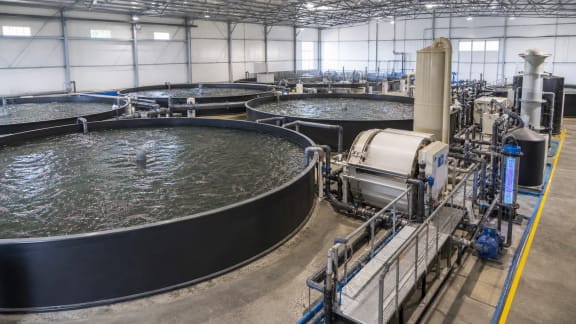
ТурцияРециркуляционная аквакультурная система (RAS), спроектированная с учётом вида выращиваемых организмов и кормовой нагрузки, объединяет бассейны выращивания, удаление твёрдых частиц, биофильтрацию, управление газами, обеззараживание, температурный контроль и аварийное жизнеобеспечение. Интеграторы в Турции могут сочетать местные резервуары, трубопроводы и системы управления с выбранными для проекта местными или импортными специализированными компонентами водоподготовки.
Поставщик и коммерческие условия требуют актуального подтверждения
Аквакультура, рыбное хозяйство и качество воды
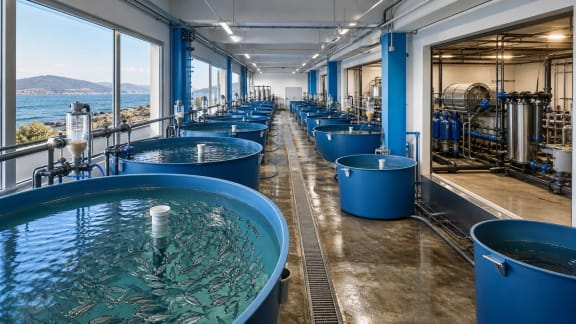
ТурцияБиобезопасное инкубационное решение, объединяющее маточное поголовье, инкубацию икры, личиночные и выростные бассейны, обработку входящей воды, поддержку живых кормов, управление температурой и солёностью, обеззараживание и аварийные системы. Инженерные компании в Турции могут интегрировать инфраструктуру местного изготовления со специализированным оборудованием, выбранным под конкретный вид.
Поставщик и коммерческие условия требуют актуального подтверждения
Аквакультура, рыбное хозяйство и качество воды
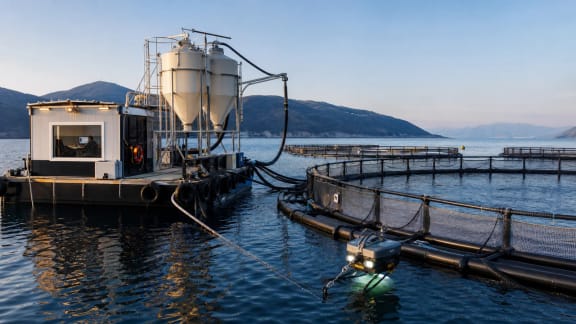
ТурцияПодключённая к данным система кормления, объединяющая силосы, дозированную подачу корма, управление по расписанию или аппетиту, камеры либо гидроакустические средства оценки биомассы и данные окружающей среды. Интеграторы в Турции могут поставить систему распределения корма и управления, подбирая местные или импортные специализированные сенсорные модули для садков, прудов или RAS.
Поставщик и коммерческие условия требуют актуального подтверждения