Independent guide
AgriTech.tr prepared this explanation and comparison guidance.
 AgriTech.trTechnologies
Technologies
Practical guides for understanding and comparing agricultural products and equipment.
Multi-sensor food inspection and sorting equipment
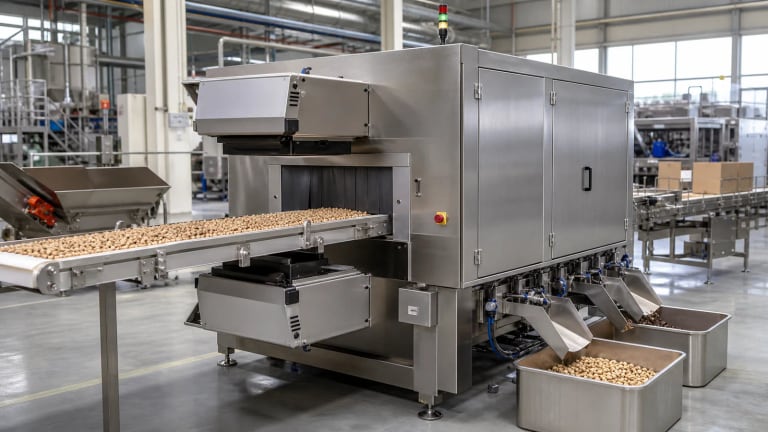
A conveyor-based inspection and sorting system combining X-ray detection, upper and lower RGB imaging, hyperspectral analysis and optional laser optics for foreign-material removal, defect classification, and quality sorting in dried fruit, nuts and processed foods.
Supplier location
Türkiye
Guide type
Buying guide
Last reviewed
13 Jul 2026
AgriTech.tr prepared this explanation and comparison guidance.
Useful starting points, not a guaranteed final configuration.
Public sources support the technical overview. Current prices, availability, and commercial details still need confirmation.
Multi-sensor food inspection and sorting equipment
The main technical details to review and confirm when comparing supplier options.
Conveyor-based multi-sensor object inspection
X-ray transmission plus upper and lower RGB cameras, hyperspectral sensing, and configurable lighting for external and internal inspection
Optional upper laser optics for project-specific material, shape, surface, or spectral discrimination tasks
Product- and configuration-specific detection probability, minimum detectable size, false-reject rate, belt loading, and sustained throughput validated by FAT
Configurable conveyor, sensor integration, controls, software, reject mechanism, guarding, and hygienic equipment scope
The main technical details to review and confirm when comparing supplier options.
Practical details that help people compare options.
Post-harvest inspection of nuts and dried fruit
Foreign-material detection on food-processing conveyors
Visible colour and shape sorting with RGB imaging
Spectral differentiation using hyperspectral imaging
Multi-sensor quality-control lines requiring recipe-based sorting
Confirm the supplier, final configuration, certifications, price, delivery, and warranty before you buy.
The sources, methods, and context used to prepare this page.
This profile defines a sourcing requirement for multi-sensor food sorting system. Suitable suppliers, origin, availability, and commercial terms are confirmed for the buyer’s project. The sourcing brief is structured around capacity, application, operating environment, required standards, destination, and delivery scope; the exact configuration requires supplier confirmation.
The conveyor-based inspection system combines X-ray transmission with upper and lower RGB imaging, hyperspectral sensing, and optional laser optics. The selected sensor stack is configured for dried fruit, nuts, seeds, pulses, grains, or other foods according to foreign-material targets, internal and external defect classes, product depth, presentation, throughput, and hygiene requirements.
Each sensing method answers a different question. X-ray response is influenced by density, thickness and product presentation; RGB cameras evaluate visible colour and shape; hyperspectral systems can distinguish spectral patterns not visible to a conventional colour camera; and laser optics can add structural contrast. The presence of several sensors does not prove detection of every contaminant. Buyers should request a written defect and foreign-material matrix for the exact crop, moisture range, product size, belt loading and line speed.
X-ray and optical inspection can target materials such as glass, stone, stainless steel, ceramic, metal, dense contaminants, color defects, shape defects, and crop-specific internal anomalies. The acceptance plan uses certified test pieces and representative product to define minimum detectable dimensions, probability of detection, false-reject rate, belt loading, and sustained throughput for the quoted sensor configuration.
A useful factory acceptance test should include good product, naturally occurring defects and certified or controlled challenge samples across expected sizes, orientations and belt positions. Record line speed, product depth, reject timing, repeated-pass results and retained-sample traceability. Confirm whether the reject mechanism, compressor, conveyor, guards, extraction, control cabinet, recipe storage, remote support and upstream/downstream interfaces are included.
For food-safety use, ask how recipes and thresholds are access-controlled, how inspection events are logged and exported, how calibration and verification checks are performed, and how software changes are documented. Determine cleaning method, hygienic design, ingress protection, belt and food-contact materials, radiation shielding and local compliance responsibilities. X-ray equipment requires site-specific safety and regulatory review; this technical specification is not such approval.
Crop-specific capacity, detection sensitivity, false-reject performance, certification, energy and air consumption, warranty, and service coverage are defined for the selected line in the quotation and factory-acceptance plan.
AgriTech.tr can structure the technical requirement and compare current supplier responses for the buyer’s project. Installation, commissioning, operator training, warranty, spare-parts, and after-sales scope must be confirmed in each supplier quotation. The final scope should be documented against the approved application, capacity, site conditions, destination, and delivery schedule in the selected supplier quotation and contract.
The sources, methods, and context used to prepare this page.
Technical reference used for system specification, project engineering, and procurement planning.
Technical reference used for system specification, project engineering, and procurement planning.
See where the information came from and what must still be confirmed with a supplier.
Independent guide
AgriTech.tr prepared this explanation and comparison guidance.
Planning values
Useful starting points, not a guaranteed final configuration.
2 public sources
Public sources support the technical overview. Current prices, availability, and commercial details still need confirmation.
Supplier-provided claims
No supplier-provided claim is represented in this evidence profile.
Document-verified information
No underlying verification record is attached to this listing.
Listing images
No listing image is used as product evidence.
Food Processing, Value Addition & Byproduct Use
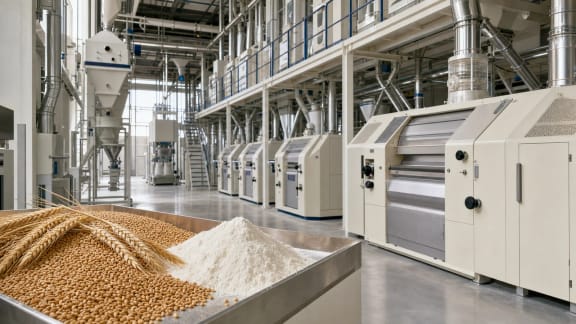
TürkiyeA turnkey wheat mill integrating intake, cleaning, magnetic and density separation, conditioning, roller milling, sifting, purification, blending, flour and by-product storage, packing, laboratory control and traceability.
Supplier and commercial terms require current confirmation
Food Processing, Value Addition & Byproduct Use
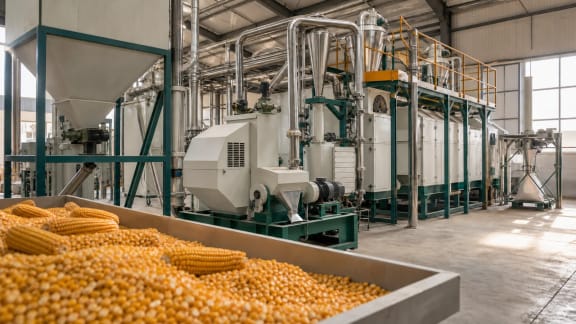
TürkiyeA turnkey dry-maize milling plant integrating cleaning, conditioning, optional dehulling and degermination, roller or impact milling, sifting, product separation, by-product recovery, packing and laboratory quality control.
Supplier and commercial terms require current confirmation
Food Processing, Value Addition & Byproduct Use
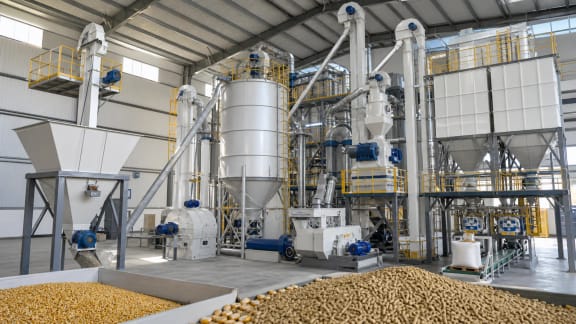
TürkiyeA turnkey compound-feed plant combining ingredient intake and storage, precision dosing, grinding, homogeneous mixing, steam conditioning, pelleting, cooling, screening, liquid addition, bagging, dust control and formulation traceability.
Supplier and commercial terms require current confirmation