Independent guide
AgriTech.tr prepared this explanation and comparison guidance.
 AgriTech.trTechnologies
Technologies
Practical guides for understanding and comparing agricultural products and equipment.
Seed and dry-product density separation equipment
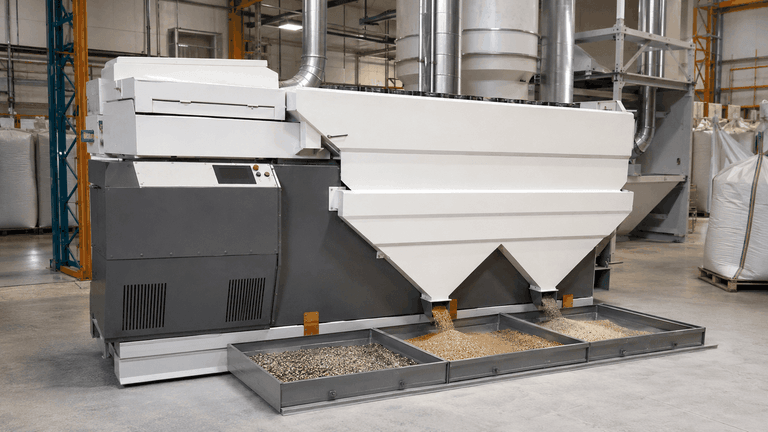
An air-fluidized reciprocating-deck separator for grading seeds, grains, pulses, oilseeds, nuts, and other dry products by specific-weight behavior, with adjustable airflow, deck angle, feed, discharge, and fraction recovery.
Supplier location
Türkiye
Guide type
Buying guide
Last reviewed
21 Jul 2026
AgriTech.tr prepared this explanation and comparison guidance.
Useful starting points, not a guaranteed final configuration.
Public sources support the technical overview. Current prices, availability, and commercial details still need confirmation.
Seed and dry-product density separation equipment
The main technical details to review and confirm when comparing supplier options.
Air-fluidized reciprocating deck using specific-weight behavior
Cereals, maize, fine seeds, legumes, cottonseed, oilseeds, rice, grass and tree seeds, pulses, and nuts
Deck motion, airflow, longitudinal/transverse angle and discharge points
Mechanical, semi-automatic and PLC configurations are described
Sized by deck area, product, moisture, feed contamination, target purity, middling recirculation, and acceptance-test conditions
The main technical details to review and confirm when comparing supplier options.
Practical details that help people compare options.
Seed-lot conditioning by specific-weight differences
Grain, maize, rice and pulse grading
Oilseed, cottonseed, grass and tree-seed processing
Nut and other dry-product separation
Recovery and reprocessing of a middlings fraction when configured
Confirm the supplier, final configuration, certifications, price, delivery, and warranty before you buy.
The sources, methods, and context used to prepare this page.
This profile defines a sourcing requirement for air-table gravity separator. Suitable suppliers, origin, availability, and commercial terms are confirmed for the buyer’s project. The sourcing brief is structured around capacity, application, operating environment, required standards, destination, and delivery scope; the exact configuration requires supplier confirmation.
The system separates seeds and dry agricultural products by specific-weight difference after screens or dimensional cleaning can no longer remove light, immature, damaged, or similarly sized contaminants. An air-fluidized deck and controlled reciprocating motion divide the feed into heavy accepted product, light reject, and adjustable middling fractions. Deck area, air distribution, longitudinal and transverse inclination, eccentric speed, feed rate, product moisture, and recirculation determine capacity and separation quality.
Gravity separation depends on the combined bulk behavior, density, size, shape, surface, and aerodynamic response of the feed; it cannot guarantee that every acceptable and defective kernel will separate. Configurations can process cereals, maize, fine seeds, legumes, cottonseed, oilseeds, rice, grass and tree seed, pulses, and nuts. Operators tune deck speed, airflow, deck surface, longitudinal and transverse inclination, feed rate, and discharge split. A return conveyor can recirculate middlings, while dust hoods, aspiration, and cyclone equipment manage airborne material.
Equipment ranges extend from laboratory and pilot units to industrial-capacity machines with mechanical, semi-automatic, or PLC control and optional recipe memory. The technical schedule records usable deck dimensions, installed power, fan and air volume, throughput range, product density and moisture basis, inlet contamination, target purity, acceptable product loss, middling recirculation, dust extraction, controls, footprint, and utilities. Capacity is quoted against the named product and acceptance test rather than as one universal headline value.
Define the upstream cleaner, grader and destoner; feed uniformity; crop and variety; moisture; bulk density; incoming foreign material; desired heavy, light and middlings fractions; target recovery and purity; and downstream conveying. Ask for deck area and material, feed control, motor and fan load, air volume and static pressure, dust-extraction points, footprint, working clearances, noise, vibration isolation, electrical panel and available automation interfaces. Where combustible agricultural dust exists, conduct a site-specific dust-hazard and explosion-protection assessment.
A sample trial should use representative lots across the normal quality range. Weigh every fraction and calculate purity, recovery, good-product loss, carryover and throughput after stable settings are reached. Record deck angle, frequency, airflow, feed rate and moisture so the result can be repeated during commissioning. Evaluate clean-down time and cross-crop contamination, particularly in seed and food applications.
Obtain a signed process guarantee or acceptance criteria, general arrangement, foundation/load data, electrical and aspiration drawings, food-contact or material declarations where relevant, conformity documents, wear and spare-parts list, training, warranty and remote/on-site service terms.
AgriTech.tr can structure the technical requirement and compare current supplier responses for the buyer’s project. Installation, commissioning, operator training, warranty, spare-parts, and after-sales scope must be confirmed in each supplier quotation. The final scope should be documented against the approved application, capacity, site conditions, destination, and delivery schedule in the selected supplier quotation and contract.
The sources, methods, and context used to prepare this page.
Technical reference used for system specification, project engineering, and procurement planning.
Technical reference used for system specification, project engineering, and procurement planning.
Technical reference used for system specification, project engineering, and procurement planning.
See where the information came from and what must still be confirmed with a supplier.
Independent guide
AgriTech.tr prepared this explanation and comparison guidance.
Planning values
Useful starting points, not a guaranteed final configuration.
3 public sources
Public sources support the technical overview. Current prices, availability, and commercial details still need confirmation.
Supplier-provided claims
No supplier-provided claim is represented in this evidence profile.
Document-verified information
No underlying verification record is attached to this listing.
Listing images
No listing image is used as product evidence.
Post-Harvest, Packing & Quality Handling
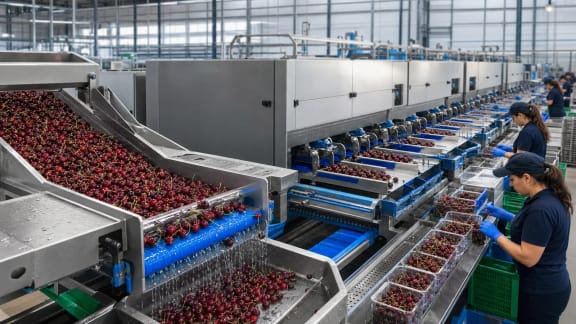
TürkiyeA gentle cherry packhouse line combining controlled infeed, optional hydrocooling, optical size and quality grading, stem-conscious transfers, weighing, packing and lot traceability.
Supplier and commercial terms require current confirmation
Post-Harvest, Packing & Quality Handling
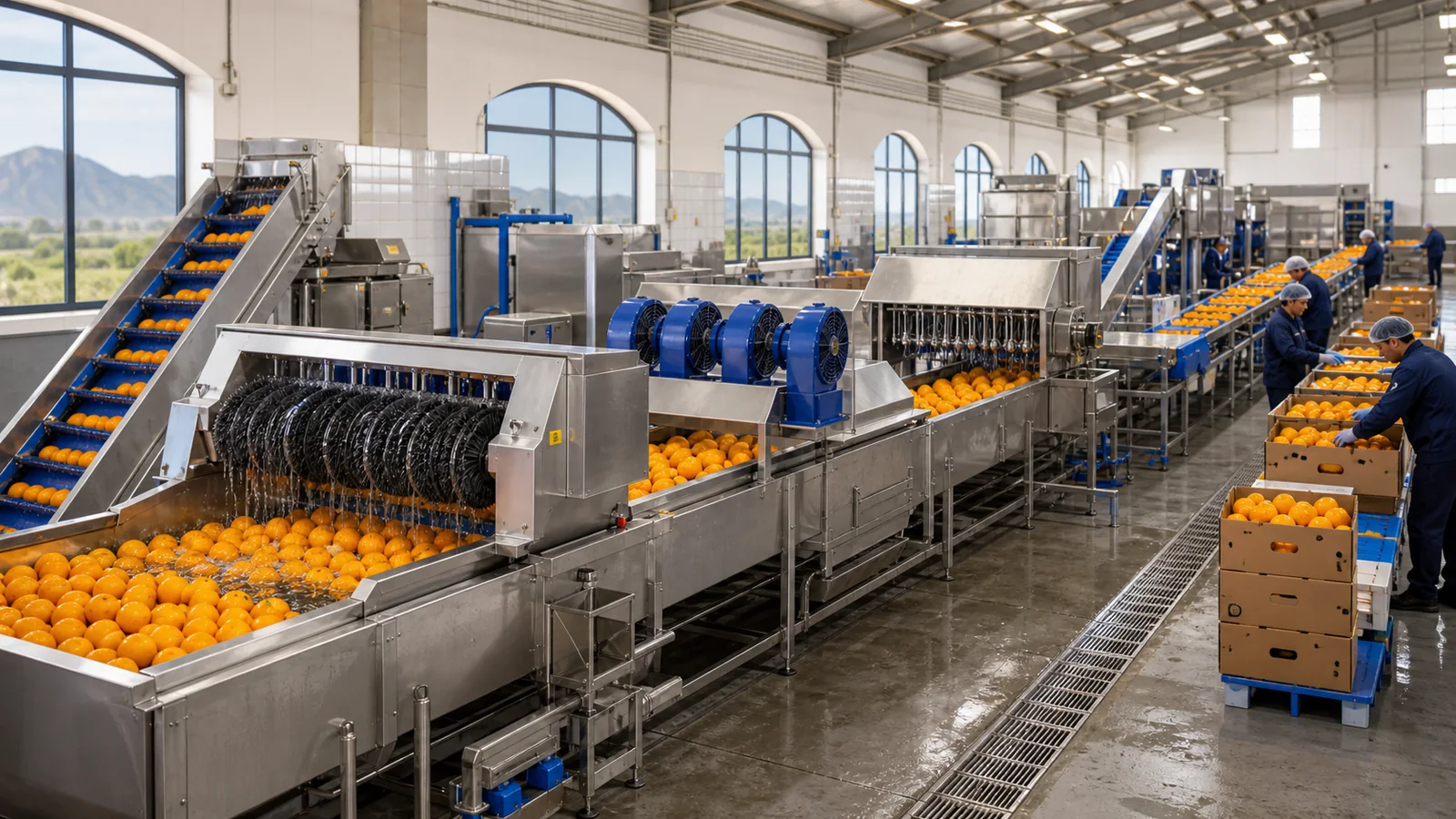
TürkiyeA modular citrus packhouse line for reception, washing, brushing, controlled treatment, drying, permitted coating, optical and weight grading, flexible packing and lot-level records.
Supplier and commercial terms require current confirmation
Post-Harvest, Packing & Quality Handling
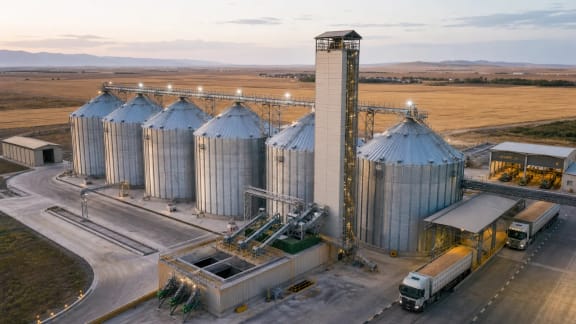
TürkiyeA turnkey bulk-grain project combining intake, pre-cleaning, weighing, galvanized flat- or hopper-bottom silos, conveyors, aeration, temperature and level monitoring, dust control and low-residue unloading.
Supplier and commercial terms require current confirmation